

Home Renovation in Toronto: Complete Guide for 2026
Planning a Home Renovation in Toronto for 2026 means balancing lasting value, craftsmanship, and transparency in a complex, evolving market. These essential insights distill everything you need to make informed, confident decisions—no matter where you are on your renovation journey.
- Invest in certified craftsmanship by choosing contractors with visible HCRA licensing, Tarion warranty, and 6+ major accreditations—these credentials guarantee legal protection and luxury standards others can’t match.
- Budget realistically for Toronto’s 2026 market by using updated ranges: $150–$400+ per sq ft for a full renovation, with kitchens ($55K–$115K) and bathrooms ($15K–$40K) as top-value upgrades.
- Prioritize “one job at a time” dedication—select builders who commit to daily, onsite project focus, ensuring your renovation finishes on time with uncompromising attention to detail.
- Start early with permits and planning since most significant Toronto projects require approvals that can take 30–120+ days; early applications and full-service teams prevent red tape delays.
- Insist on transparent, detailed contracts with line-by-line cost breakdowns, clear scope, and documented insurance—protecting you from hidden fees, allowance gaps, and unwelcome surprises.
- Allocate 10–15% contingency in your budget for the unexpected, especially in older GTA homes where surprises behind the walls are common.
- Demand before-and-after galleries and local references from contractors—proven Toronto transformations and real homeowner reviews deliver peace of mind and vision for your own project.
- Choose full-service, family-led teams for seamless coordination from design to completion; with over 55 years of heritage, firms like Queens Home offer true luxury—that stands the test of time.
Ready to build your dream space? Dive into the full guide to unlock proven processes, city-specific examples, and a renovation experience built entirely around your vision and peace of mind.
Introduction
Imagine stepping into your Toronto home in 2026—each detail meticulously crafted, every finish exuding warmth and durability, and not a single shortcut hiding behind the walls.
If you’re considering a renovation, finding the right partner is everything: a team that brings 55+ years of trusted family expertise, stands behind luxury-level finishes, and focuses on your home every single day until it’s perfect.
This guide is your blueprint for a renovation experience that goes beyond surface upgrades—one rooted in clear communication, ironclad credentials (Tarion warranty, HCRA licensing, RenoMark, WSIB, OHBA, CHBA, BBB), and unwavering dedication.
You’ll discover what separates an inspired transformation from frustrating “good enough”:
- The real costs and 2026 market trends shaping Toronto renovations
- Exactly how to navigate permits, timelines, and city requirements
- Choosing a contractor who prioritizes quality and transparency—never juggling multiple jobs
- How to set a smart, realistic budget that protects your investment for decades
- The power of working with a full-service team that handles everything—from design to permits to finishes—with a single point of contact
A renovation isn’t just cosmetic; it’s rewriting your home’s story and legacy.
If you want timeless style, premium finishes, and an experience grounded in family-level care, you’re in the right place.
Ready to see what’s defining Toronto’s most desired homes and how you can bring that vision to life—without unwelcome surprises or compromises?
Let’s reveal the trends and strategies that deliver not just a beautiful renovation, but a home you’ll love for a lifetime.
1. 2026 Toronto Home Renovation Trends: Design, Function, and Value
The 2026 Toronto renovation market is all about creating homes that feel just as beautiful as they are practical. Homeowners are prioritizing lasting value, energy efficiency, and “forever home” upgrades over fast trends — a response to economic uncertainty and market slowdowns seen across the city.
“Renovate once, love it for decades.” This mindset drives the most in-demand projects right now.
Elevated Design Meets Effortless Functionality
Picture this: warm natural wood tones instead of stark white kitchens, blending with earthy palettes like taupes, clay, and deep greens. Spaces flow seamlessly thanks to:
- Integrated cabinets that conceal pantries and appliances
- Statement stone surfaces with bold veining
- Retro curves in lighting and furniture — subtle 1970s nods without feeling dated
Spa-inspired bathrooms are a must: think wet-room layouts, walk-in showers, and layered, tranquil lighting that turns your daily routine into a luxurious ritual.
Durable Materials, Smart Tech, and Flexible Spaces
Renovations in 2026 are built to withstand real life — and the next market cycle. Homeowners are making bold investments in:
- Premium insulation and high-efficiency HVAC for lower operating costs
- Smart home tech integrations: security, temperature, and lighting automation
- Natural stones and innovative surfaces for countertops and flooring
- Flexible family spaces—play zones, remote work studios, guest suites
Family living areas double as hybrid offices or recreational spaces that easily adapt as the household’s needs evolve.
Upgrade for Value, Resale, and Everyday Joy
If you’re thinking resale, realtors suggest timeless finishes over ultra-niche colors. Layered lighting and thoughtful material choices dramatically upgrade both curb appeal and comfort.
Key takeaways for your next Reno vision board:
- Invest in quality finishes and certified craftsmanship.
- Prioritize upgrades that cut energy bills and stand the test of time.
- Before-and-after photos are convincing proof — always ask to see a contractor’s transformation galleries specific to your Toronto neighbourhoods.
Trend-savvy renovations in 2026 make every square foot do more — and showcase your home as a reflection of what’s next in Toronto living. Luxury is about longevity, not flash; quality, not quantity.
Want a closer look at what’s defining Toronto’s new style? Explore [Top Home Improvement Trends in Toronto for 2026] for more inspiration and stunning project photography.
2. Home Renovation Costs in Toronto (2026): What to Expect & How to Budget
The cost of Home Renovation in Toronto depends on your property’s size, renovation scope, material selections, labour costs, and structural requirements. Understanding realistic price ranges before starting your project allows homeowners to create an accurate budget, avoid unexpected expenses, and maximize the long-term value of their renovation investment.
2.1 Full Home Renovation Cost Ranges
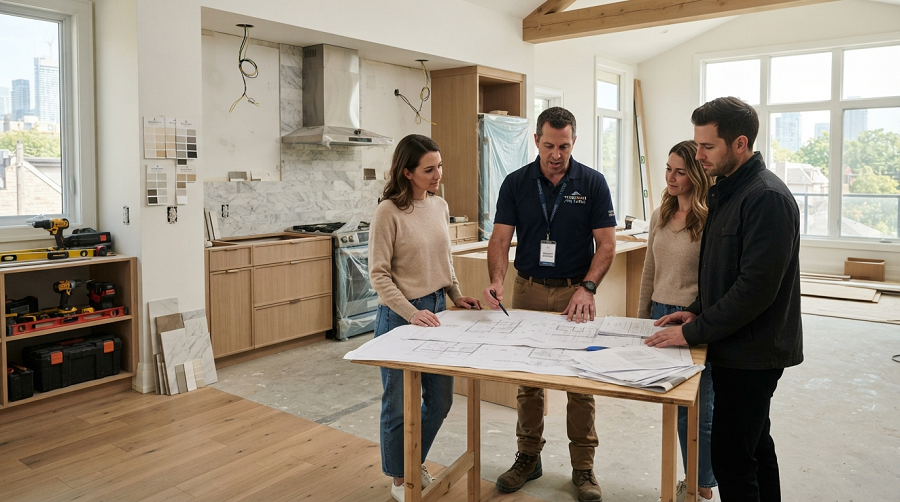
Picture this: You’re standing in a sunlit Toronto living room, imagining every wall refreshed and every detail customized.
2026 Home Renovation Cost Snapshot
A Home Renovation in Toronto typically costs
$150–$400+ per square foot,
depending on project scope, materials, labour, permits, and customization.
| Typical 2,000 sq ft Home | $300,000–$800,000 |
| Luxury Custom Renovations | $500+ per sq ft |
| Ontario HST | 13% applies to most renovation services and materials. |
Major pricing factors include: structural modifications, permit requirements, custom cabinetry, premium finishes, electrical and plumbing upgrades, HVAC work, home additions, and the overall complexity of the renovation.
A full Home Renovation in Toronto typically costs $150–$400+ per square foot, depending on the project’s scope, materials, labour, and customization.
- 2,000 sq ft home: $300,000–$800,000
- Luxury custom renovations: $500+ per sq ft
- Ontario HST (13%) generally applies to nearly all renovation services and materials.
Actual pricing varies based on structural modifications, permit requirements, custom finishes, mechanical upgrades, and overall project complexity.
Location matters: Downtown, heritage homes, and cottage country projects each come with unique price tags, driven by local bylaws, access, and complexity.
“Big results require real budgets—anything less risks shortcuts you’ll notice for decades.”
—
2.2 Typical Project Costs by Room & Scope
Homeowners see the most value in targeted upgrades and thoughtful design.
Sample 2026 cost ranges:
- Kitchen: $55,000–$115,000 (custom millwork, premium appliances)
- Bathroom: $15,000–$40,000 (spa fittings, luxury tile)
- Basement: $80–$150+/sq ft (well-finished, not underpinned)
For a significant remodel—think new layout, upgraded systems, everything but the studs—picture $250,000–$500,000 for a 3,000 sq ft home.
A cosmetic refresh (flooring, painting, light kitchen/bath updates) makes sense when structure and systems are sound but spaces feel dated.
“A luxurious kitchen or serene bathroom isn’t just a splurge—they’re upgrades that transform how you live every day.”
—
2.3 Professional, Permit, and “Soft” Costs
Budgeting for renovation isn’t just about what you see on the surface.
Key costs beyond construction:
- Design/architect/engineer: 8–15% of total budget
- General contractor management: 10–25%
- Permits: $400–$5,000+, scaling with complexity
- Contingency: 10–15% for the unexpected—vital in Toronto’s older homes
Typical fee structures:
- Fixed-price: All-in cost agreed up front
- Cost-plus: Transparent invoicing plus agreed management fee
“Don’t budget to the penny—reserve space for surprises. In a Toronto reno, something always lurks behind the walls.”
Before beginning any Home Renovation in Toronto, homeowners should verify whether building permits are required. The official City of Toronto Building Division provides detailed guidance on renovation permits, inspections, and Ontario Building Code requirements to help ensure your project remains compliant from start to finish.
2.4 Toronto Market Forces & 2026 Cost Drivers
Renovating in Toronto today means planning for a changing landscape.
Current forces shaping 2026 budgets:
- Labour shortages mean higher rates and longer lead times
- Material volatility: Tariffs and supply delays raise costs
- Premium finishes remain popular for long-term value and durability
Smart homeowners:
- Book trades early—top professionals are often scheduled months out
- Prioritize transparency: Detailed quotes, clear allowances, and an open-book policy avoid cost creep
- Choose quality over shortcuts: The best materials stand the GTA’s test of time and remain timeless for resale
A well-planned renovation considers all costs—visible and hidden—and leans into trusted, credentialed pros for transparency and peace of mind. Book a free consultation early to map out accurate numbers and timelines tailored to your home’s unique needs.
3. Toronto Building Permits: Navigating the 2026 Landscape
Every successful Home Renovation in Toronto begins with understanding local building regulations and permit requirements. Whether you’re removing structural walls, finishing a basement, or adding new living space, obtaining the appropriate permits helps ensure your renovation complies with Ontario Building Code standards and protects your investment.
3.1 Understanding When Permits Are Required
Almost every significant home renovation in Toronto needs a City of Toronto building permit — and not just for additions.
If you’re planning:
- Structural changes (taking out/load-bearing walls, new windows, roof alterations)
- Major plumbing, HVAC, or electrical rework (behind the walls or major fixture moves)
- Basement work (lowering, underpinning, or adding a legal suite)
- Additions or ADUs (laneway/garden suites, extra living units)
…your project must have formal city approval.
Permits are NOT required for:
- Cosmetic updates (painting, flooring, trim)
- Like-for-like replacements (swapping a faucet or light in the same spot)
Any significant electrical work also demands an ESA permit, issued by Ontario’s Electrical Safety Authority — this is fully separate but often needed alongside your building permit.
If your home is in a heritage conservation district or you need a zoning variance, expect a longer, more involved approval.
Quotable: “If you’re touching structure, systems, or layout, there is no shortcut — permit approval is mandatory in Toronto.”
3.2 How Much Permits Cost in 2026
Toronto permit fees combine minimum charges plus rates by area and project type.
Typical 2026 numbers:
- Minimum building permit: ~$215
- Interior renovation: $11.53 per m² affected
- Basement finishing: $6.20–$11.09 per m² (minimum $206)
- New addition: $18.56 per m² added
- ADUs/garden/laneway suites: $2,500–$5,000 (including reviews)
Many interior single-room projects run $400–$1,500 in permit costs, while structural additions and legal suites are often $1,500–$5,000+.
Extra fees can include:
- Zoning Certificate Review (usually 25% of permit fee)
- Committee of Adjustment/Minor Variance (commonly $500–$3,500+ if special approval is needed)
“Picture this: A new open-concept kitchen in a Toronto semi, with moved plumbing and a support beam, will typically hit $1,000–$2,000 in permit costs before construction starts.”
3.3 Permit and Approval Timelines
Expect:
- Simple permits (plumbing/HVAC): ~5 business days
- Interior layout or basement: 5–10 business days
- Major structural/additions: 10–30+ business days
- ADUs/multi-discipline projects: 30–60 days minimum
If your property is part of a heritage zone or needs a minor variance, that can add 2–4 months, with some reviews stretching to 120 days.
Tips for faster approval:
- Start permit applications early (at least 3–6 months before your desired construction date)
- Submit detailed, complete drawings from the outset
- Engage a full-service contractor who handles permit design in-house — this avoids back-and-forth delays
Quotable: “The city clock starts when you submit a complete package, not when you first reach out — so preparation is everything.”
Picture the permit process as Toronto’s renovation gatekeeper: mandatory for structure and systems, with costs and timelines that shape your entire project. Starting permits early, budgeting for real fees, and relying on expert guidance transforms red tape into smooth progress — and that’s how stunning, legal homes get built in 2026.
4. Workflow & Timeline: From Consultation to Completion
The path from renovation dream to finished keys-in-hand starts with transparency and a clear step-by-step process.
Queens Home elevates every project with a “one job at a time” onsite commitment — the team is dedicated to your home daily until it’s done.
Picture this: You walk through your home after a major transformation, knowing every detail was handled by professionals who treat your project as their own.
Step-by-Step: The Queens Home Approach
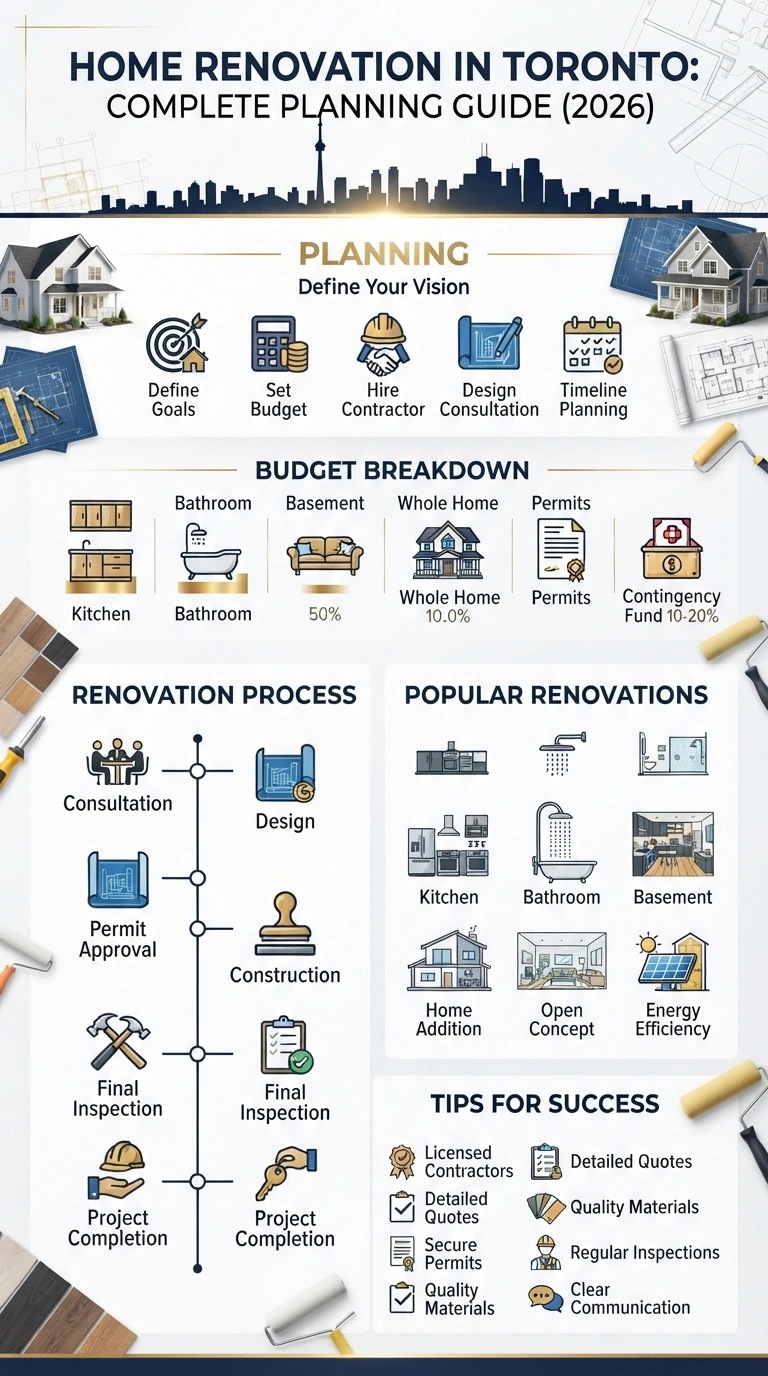
Every Toronto renovation follows this proven, stress-minimized sequence:
- Discovery & Free Consultation
- In-person or virtual, zero-pressure consultation with a Queens Home expert.
- Needs assessment and detailed wish-list gathering.
- Design Development
- Architectural drawings, structural engineering, and curated finish selections.
- You see mood boards, 3D visuals, and material samples in hand.
- Permitting & Approvals
- Full permit application and city approvals (most Toronto renos require permits).
- HCRA-licensed and Tarion-backed support; no gaps in compliance.
- Construction & Daily Site Management
- One dedicated team onsite, every day — no “job hopping.”
- Clear milestones, daily updates, and all trades synchronized for seamless progress.
- Final Walkthrough & Documentation
- Thorough punch-list, hands-on demonstration of new systems, all paperwork delivered.
“Every step is mapped, every decision documented, and every promise kept — that’s the difference a family-run, one-job focus delivers.”
4.1 Typical Project Timelines
Toronto full-home renovations generally require:
- 12–18 months for full-house transformations (2,000–3,000 sq ft)
- 4–7 months for kitchens, basements, or main floors
- 2–4 months for bathrooms, quick cosmetic upgrades, or reconfigurations
Start design and permitting early: Begin 3–6 months in advance to secure trade time and permit approvals.
Best practices include:
- Early selection of finishes to avoid supply delays
- Realistic move-out/move-in planning
- Booking trusted trades in advance (Toronto lead times often 2–4 months)
“Smart scheduling is the foundation of a smooth renovation — with every milestone, you know exactly where you stand.”
4.2 Managing Delays and Unforeseen Events
Even the best-planned projects can face snags, especially with materials volatility and city permit backlogs.
Most common delay triggers:
- Custom material lead times
- Trades availability (especially summer peaks)
- City of Toronto review periods (up to 30–60+ days for structural/complex jobs)
Queens Home’s daily on-site presence minimizes risks:
- Proactive issue-spotting and transparent progress updates
- Clear milestones and check-ins to catch changes before they derail the schedule
- Dedicated site management — “We’re there every single day until the keys are back in your hand.”
“Ask about daily site presence — it’s the difference between timeline disasters and on-time, on-budget results.”
Toronto’s 2026 construction climate means top contractors are projecting longer trade lead times and emphasizing meticulous planning.
—
Strong project planning, transparent steps, and a relentless daily presence set exceptional renovations apart. If you want a renovation completed with full focus and clear milestones, look for that “one job at a time” promise — it’s your assurance of craftsmanship and daily accountability.
5. Choosing the Right Renovation Contractor in Toronto
Hiring experienced professionals is one of the most important decisions for any Home Renovation in Toronto project. Reputable contractors provide transparent estimates, quality craftsmanship, proper licensing, and clear communication throughout every stage of the renovation process, helping homeowners achieve exceptional results with confidence.
5.1 Where and How to Search
Finding the best renovation contractor in the GTA starts with trusted, transparent channels.
Look for professionals through:
- Verified review platforms (such as HomeStars and Google), which showcase real Toronto homeowner experiences.
- Accredited contractor directories that highlight HCRA-licensed and Tarion-registered firms.
- Referrals from friends or neighbours with recently completed work in your area.
- Portfolio pages featuring before-and-after photos from Toronto, Vaughan, Richmond Hill, and more.
With demand for luxury results and seamless project management rising in 2026, many homeowners are choosing integrated, design-build teams—not just for smooth communication but for fewer surprises and one point of accountability.
“A contractor’s past work in your exact neighbourhood often predicts your result—city-by-city portfolios matter more than slick ads.”
5.2 Key Contractor Criteria: Establishing Trust and Transparency
Don’t settle for generic promises—insist on clear credentials and genuine local expertise.
Before you sign, confirm the contractor has:
- HCRA licensing and Tarion warranty (both are legal basics for major work).
- WSIB and general liability insurance for protection and peace of mind.
- Visible badges or memberships (RenoMark, CHBA, OHBA, BBB).
Ask about:
- Experience with Toronto homes—especially heritage properties, complicated permit processes, or multi-unit sites.
- Proposal standards—are you getting detailed, line-by-line cost breakdowns and prompt replies?
- Their “one job at a time” focus—the clearest sign you won’t be left waiting while crews jump elsewhere.
A premium renovation experience starts with clear, credentialed communication.
5.3 Evaluating Quotes, Contracts, and Reputations
Scrutinize every detail before you commit—especially when a full home renovation now averages $300,000–$800,000 in Toronto.
Break down contractor bids by:
- Scope inclusions and exclusions (What’s not included? Appliances? Landscaping?).
- Allowances for finishes (tile, hardwood, fixtures).
- Contract type (Fixed price, cost-plus? General contractor fee should be 10–25%.)
Add these to your checklist:
- References and in-person site visits—ask to see both completed and ongoing jobs for real transparency.
- Photo galleries organized by city or project type—look for consistent finishes and site cleanliness.
- Watch for red flags: long response times, missing documentation, or credentials that don’t check out.
Queens Home’s 55+ year local heritage and daily on-site focus can be a powerful differentiator if you want a team as invested in the result as you are.
“You’re not just hiring a contractor—you’re choosing a legacy. That decision shows every time you open your front door.”
5.4 Recognizing Renovation Specialties
Not every renovation is the same—specific expertise matters.
For your project:
- Call a restoration pro for heritage or structural repairs.
- Seek a design-build team for luxury kitchens, bathrooms, or whole-home transformations.
- Choose specialists for basements, smart integration, or aging-in-place upgrades.
When in doubt, ask to see not just the firm’s credentials, but actual, location-labeled before-and-after galleries matching your property type.
For tailored advice, see [Home Restoration vs Renovation in Toronto Explained] and build your shortlist with complete confidence.
The right contractor delivers more than a gorgeous finish—they bring peace of mind, lasting value, and a renovation experience built on trust, transparency, and craftsmanship from day one.
6. Building a Smart, Realistic 2026 Renovation Budget
Planning your Toronto home renovation budget in 2026 means balancing dream upgrades with real costs—and setting yourself up for both function and peace of mind.
A thoughtful budget does more than keep spending on track: it helps ensure lasting value and transforms decision stress into excitement.
1. Define Scope and Must-Haves
Start by listing every renovation goal—from must-do structural updates (think: open-plan kitchens or basement remodels) to wishlist upgrades like spa bathrooms or custom millwork.
- Rank each item as a “must-have” or “future phase.”
- Note if your project is a gut renovation, layout update, or just a refresh.
- Be ready to phase work if needed.
Imagine reviewing your scope at a kitchen island, prioritizing custom cabinetry while earmarking heated floors for next year.
“Define what matters most today, and let everything else become part of tomorrow’s vision.”
2. Estimate Using 2026 Cost Ranges
Quick-reference 2026 Toronto numbers:
- Full home reno: $150–$400/sq ft
- Kitchen: $55,000–$115,000
- Bathroom: $15,000–$40,000
Multiply your home size to find your base budget. For a 2,500 sq ft house at mid-range ($200/sq ft), expect $500,000–$600,000 before soft costs and HST.
3. Add Soft Costs and HST
Include all required extras:
- Design/architect fees: 8–15% of build cost
- Permits and engineering: $3,000–$10,000+
- General contractor margin: 10–25%
- 13% HST on almost everything
Picture this: crisp spreadsheets in hand, every number mapped, no unwelcome surprises at invoice time.
4. Plan for Contingency Funds
Older GTA homes hide stories behind their walls.
Set aside 10–15% of your total for surprises—like century-old wiring or unexpected water issues.
“Smart budgeting isn’t just numbers—it’s future-proofing against the unknown.”
5. Make Strategic Trade-Offs
If the totals stretch your comfort, adjust scope:
- Prioritize structural safety and resale upgrades.
- Stage interiors or landscaping for future phases.
Many 2026 Toronto renovators break projects into sequenced phases—ensuring the envelope and systems today, interiors and luxuries tomorrow.
Building Confidence with the Right Partner
When reviewing firms, insist on full credentials—HCRA, WSIB, and insured.
Start with a free, detailed consultation: bring your scope, photos, wish list, and questions. Expect clear cost breakdowns, schedules, and no-pressure advice.
With Queens Home, every budget is managed with family-level care, one job at a time—so your investment results in luxury and longevity, and not a single dollar is wasted.
A realistic, transparent budget isn’t about saying no—it’s about saying yes to a project that delivers beauty, value, and lasting peace of mind.
7. Home Renovation Services Overview & When to Consider Repair or Restoration
Professional Home Renovation in Toronto services cover everything from cosmetic upgrades to complete structural remodeling. Understanding the different renovation, repair, and restoration options helps homeowners choose the right solution based on their property’s condition, budget, and long-term goals.
Toronto Renovation Service Types: What’s Available
Homeowners in Toronto can choose from a full-home renovation, targeted room updates, specialty restoration, or urgent repair services—all driven by the unique needs of every property.
- Full renovations transform the entire home, updating layouts, systems, and finishes for a cohesive result.
- Room-by-room projects (such as kitchen, bathroom, or basement renos) focus on high-impact spaces with budgets that flex by scale—think kitchens from $55,000–$115,000 or bathrooms starting at $15,000–$40,000.
- Restoration services address historical or aging homes, preserving heritage features and tackling structural repairs.
- Urgent repairs (water damage, electrical or structural issues) require skilled response—ideal for sudden leaks or safety hazards.
“Every Toronto home tells a story—renovation is about protecting its future, not just changing its look.”
Full vs. Staged Renovation: How to Decide
The choice between renovating everything at once or moving space-by-space is personal—what does your family need, and when?
- Full renovation works best if:
- Major updates are required throughout
- System upgrades (electrical, plumbing, insulation) are needed
- You want a single, coordinated finish and faster completion (12–18 months for whole-home projects)
- Staged renovations are better for:
- Managing cash flow by phasing work
- Minimizing disruption—living in the home during some upgrades
- Prioritizing urgent projects first (e.g., a must-fix bathroom or outdated wiring)
“Tackle the envelope and systems first, then update interiors—this is how many Toronto homeowners are prioritizing work in 2026.”
The Value of Full-Service, Single-Source Renovation
Choosing a single, full-service team—one who manages everything from permits and design to finishing touches and aftercare—brings unmatched peace of mind.
- Integrated project oversight means fewer delays, real accountability, and no gaps between trades.
- Transparent communication ensures you’re never guessing about costs, timelines, or next steps.
- “One team from start to finish means your vision—and investment—are protected at every step.”
Knowing When Restoration or Urgent Repairs Are Needed
Picture this: water suddenly pooling on a century-old hardwood floor, or vintage plaster crumbling after a cold snap. Restoration expertise or urgent repairs become non-negotiable, protecting both your family and your investment.
- Use Home Repair Services in Toronto: Quick Fixes & Solutions for urgent needs.
- Get clarity about process differences via Home Restoration vs Renovation in Toronto Explained.
- For a breakdown of what a top-to-bottom renovation includes, visit Home Renovation Services Toronto: What’s Included?.
When the unexpected strikes, choosing a credentialed, full-service contractor is the surest path to a lasting, beautiful result. In Toronto’s dynamic housing market, the right service—and partner—protects your home’s story and future value.
8. Showcasing Excellence: Top Renovation Companies, Credentials, and Photo Inspiration
The best Home Renovation in Toronto companies combine experienced craftsmen, premium materials, detailed project planning, and outstanding customer service. Reviewing previous projects, certifications, warranties, and client testimonials can help homeowners confidently choose a contractor capable of delivering high-quality, long-lasting renovations.
What Makes Toronto’s Top Renovation Firms Stand Out
When searching for a Toronto renovation company, focus on proven craftsmanship, transparency, and local expertise—these qualities define the top contenders in 2026.
Clear standouts in the GTA all share several qualities:
- Verified credentials (HCRA, Tarion, WSIB, RenoMark, OHBA, CHBA, BBB)
- Documented experience with structural projects and heritage homes
- Exceptional reviews on trusted platforms
- A “one job at a time” approach for dedicated project focus
A remarkable quote to remember:
“Luxury that lasts is built on trust, not just finishes.”
The Credentials That Matter (And Why They’re Non-Negotiable)
Before inviting any firm into your home, look for visible badges and accreditations.
Top renovation companies in Toronto will display:
- HCRA licensing (Home Construction Regulatory Authority)—a legal must for builders
- Tarion Warranty—protects new builds and large-scale renovations
- WSIB coverage and liability insurance—mitigates risk
- Membership in RenoMark, OHBA, CHBA, BBB—signals commitment to standards and ethics
Picture this:
A Gold-badged portfolio, with every certificate clearly shown—instant peace of mind.
Reputable contractors prove their commitment; credentials are your permission to expect perfection.
Visual Inspiration: Before/After Galleries & the Power of Legacy
Toronto’s best firms showcase stunning before/after galleries for each neighbourhood:
- Vaughan, Richmond Hill, Collingwood, Barrie—every home gets its story
- Each gallery labelled with precise location for local trust
At Queens Home, 55+ years of family leadership mean each project is treated like our own—clients see meticulous craft in every photo, not just grand results.
“Every transformation inspires: the moment a dated, cramped kitchen becomes the heart of a family’s new legacy.”
Your Next Step: See the Portfolio, Book a No-Pressure Consultation
Take these actions for immediate results:
- Review city‑specific portfolios online—look for before-and-after evidence, not just perfect “afters”
- Ask to visit an in-progress site for true insight
- Insist on credentials before any contract
Choosing a company with visible expertise and transparent communication puts you in control—“Trust is the most valuable material in any home.”
A top-tier renovation starts with clear credentials and documented transformations. Explore galleries, check for badges, and use your free consultation to experience the difference between ordinary and inspired craftsmanship.
Conclusion
A home renovation is more than an upgrade—it’s a legacy-defining investment, transforming your Toronto property into a sanctuary of quality, functionality, and lasting value.
With a “one job at a time” focus, proven credentials, and a fully transparent approach, you’re empowered to expect meticulous craftsmanship and zero surprises—delivering results as enduring as your family’s story.
—
Take these insights forward as you begin your journey:
- Insist on licensed, credentialed contractors—HCRA, Tarion, WSIB, and visible badges are non-negotiable for peace of mind
- Demand daily, onsite project dedication—one-team focus ensures true accountability and superior results
- Request neighborhood-specific portfolios—before-and-after galleries offer real proof of expertise in your area
- Budget with all costs in mind—plan for design, permitting, soft costs, and contingencies to eliminate surprises
- Prioritize transparent communication—expect clear breakdowns, no-pressure consultations, and rapid responses
—
Ready to build? Start with these action steps:
- Book your free consultation—bring your ideas, questions, and vision for tailored, credentialed advice
- Compare portfolios and credentials from top Toronto firms to choose the team that matches your needs and values
- Outline your must-haves and wish list to focus your scope and maximize your return on investment
—
Every beautiful renovation begins with a commitment—to quality, transparency, and a partner who treats your home like their own. “A home well renovated writes its own story for decades—let yours be built on trust, skill, and enduring beauty.”
Your next chapter starts today—craft it with confidence.
Planning a Home Renovation in Toronto?
Whether you’re renovating a kitchen, bathroom, basement, or your entire property, working with experienced professionals makes all the difference. Explore our Home Renovation Services in Toronto to learn how our team delivers custom renovations, premium craftsmanship, transparent pricing, and exceptional results tailored to your home’s unique needs.
FAQs
How much does Home Renovation in Toronto cost in 2026?
Complete home renovations typically range from $75,000 to over $300,000, depending on the home’s size, finishes, structural work, and project complexity.
Do I need a building permit for Home Renovation in Toronto?
Many renovations—including structural changes, basement finishing, additions, plumbing modifications, and electrical work—require permits. Always verify requirements with the City of Toronto before construction begins.
How long does a complete home renovation take?
Most whole-home renovation projects require 3 to 8 months, depending on project scope, permit approvals, material availability, and contractor scheduling.
How do I choose the best renovation contractor?
Look for licensed contractors with strong portfolios, verified reviews, insurance coverage, transparent estimates, warranties, and experience completing similar renovation projects throughout Toronto.
Which renovation adds the most value?
Kitchen renovations, bathroom remodeling, basement finishing, energy-efficient upgrades, and open-concept living spaces generally provide the highest return on investment.
What is the best home renovation company in Toronto?
There is no single answer that fits every project — the right company is the one whose experience matches the work you actually need. Compare firms on four things you can verify: a portfolio containing projects of your type and scale, proof of liability insurance and a current WSIB clearance certificate, a written fixed-scope contract with a line-item budget, and references from projects completed in the last two years. If your project is a new home rather than a renovation, the builder must also hold an HCRA licence and enrol the home with Tarion.
Should I choose a design-build company?
For most whole-home projects, yes. A design-build firm carries the design and the construction under one contract, so there is a single point of accountability when a drawing and a site condition disagree. Split contracts — the architect on one, the contractor on another — leave that gap for the homeowner to manage, and it is usually where the schedule and the budget slip.
How do I verify a renovation contractor in Ontario?
Ask for four documents and check each one yourself: a certificate of liability insurance naming your address, a WSIB clearance certificate (verify it free through WSIB’s eClearance service), a written contract setting out scope, payment schedule and the change-order process, and the HST number if the quote includes HST. For new home construction, confirm the builder’s licence on the HCRA public registry and check their Tarion builder record. A contractor who hesitates on any of these has told you something useful.